The Coordination Layer
for Autonomous Conflict
Turns battlefield sensing into coordinated action across human and autonomous forces.
Sense. Decide. Coordinate. Locally.
UNMORF replaces the central command bottleneck with a distributed coordination layer. Each node operates independently while maintaining coherent action across the force — no real-time communication required.
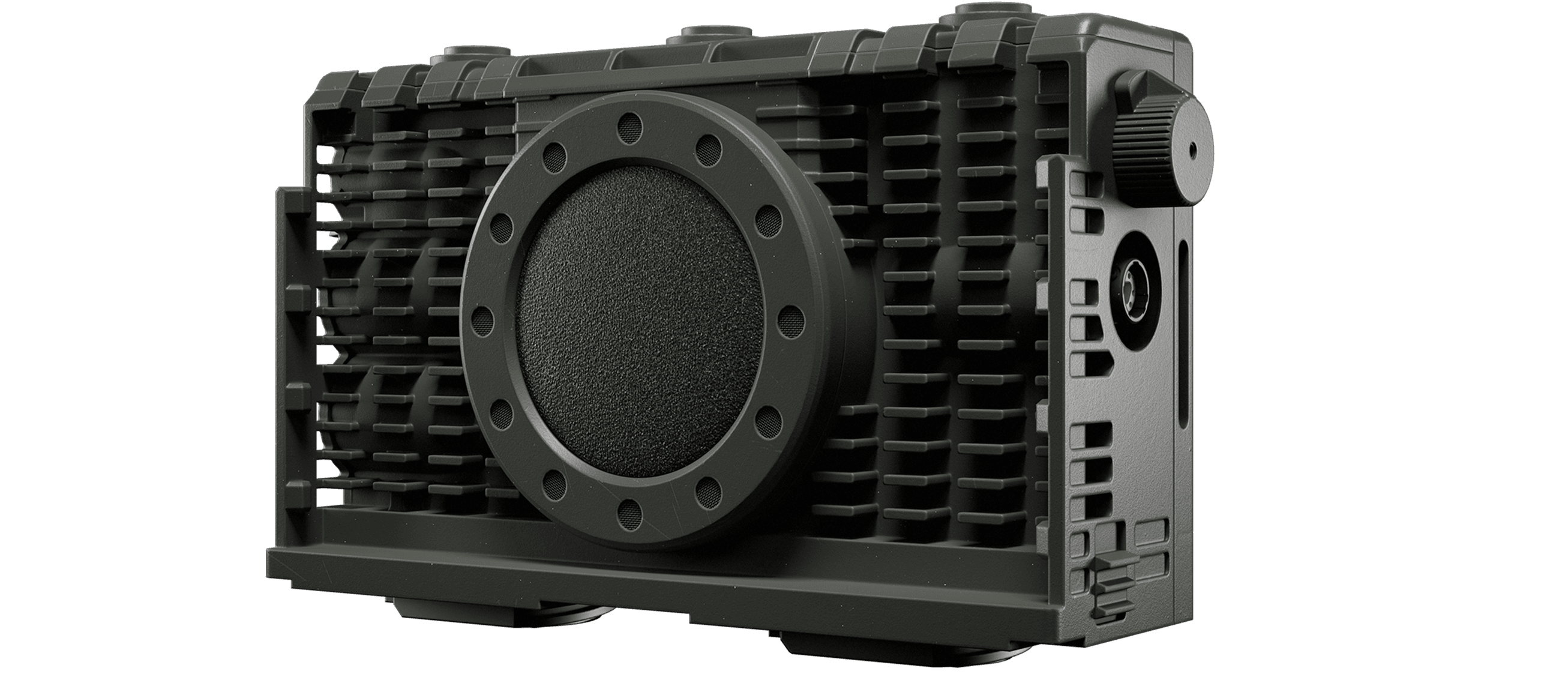
Multi-sensor fusion on-device
Each node fuses data from local sensors — EO/IR, RF, Acoustic — into a tactical situational picture. No cloud dependency, no data exfiltration risk.
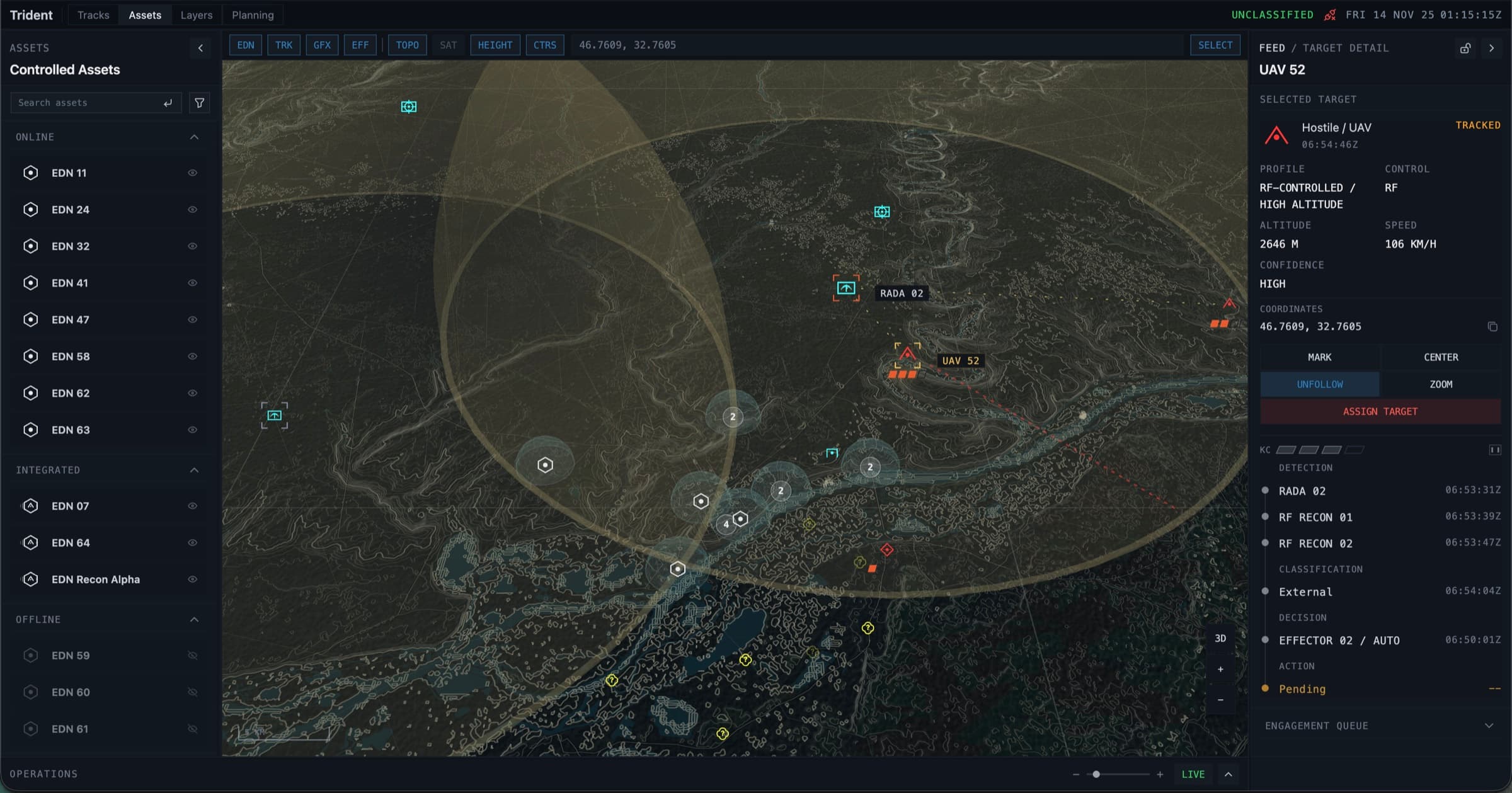
→Autonomous classification and tasking
On-device models classify threats and assign engagement priorities within the decision window. Each node acts on what it knows, when it knows it.
→Distributed coherence without comms
Nodes achieve coordinated action through shared behavioral rules, not real-time synchronization. Coherence persists even when nodes are lost or comms are jammed.
Built for the contested edge
Expose Hostile Networks
Detect and localize hostile launch sites, relay links, and control nodes. Map the kill chain and disrupt the infrastructure behind the attack, not just the drone in flight.
Protect Friendly Forces
Detect inbound threats early and extend the reaction window. Enable countermeasures across vehicles, dismounted units, and autonomous systems.
Survive the Contested Edge
Passive-first, low-signature, and edge-native. Continue operating through jamming and node attrition. Built for environments where emitters become targets.
Not another C2 dashboard
Existing solutions digitize the old model — a human operator commanding assets through a screen. UNMORF replaces the model itself. We don't build better command interfaces. We build systems that don't need them.
The result: autonomous forces that stay coordinated even when comms go down, nodes get destroyed, and the battlespace saturates beyond human cognitive bandwidth.
Decentralized by construction
Friendly assets transit without supervision or coordination overhead, with deconfliction running directly on each node. Hostile drones trigger local response authority, enabling nodes to evade, cue countermeasures, or intercept within the engagement window. Because nodes operate independently under shared rules, the loss of any single node does not degrade system-level coordination.
Building the coordination layer
We're assembling the team and partnerships to make decentralized autonomous coordination a reality.
If you're an investor, a defense operator, or an engineer who thinks about these problems — we should talk.